Introduction
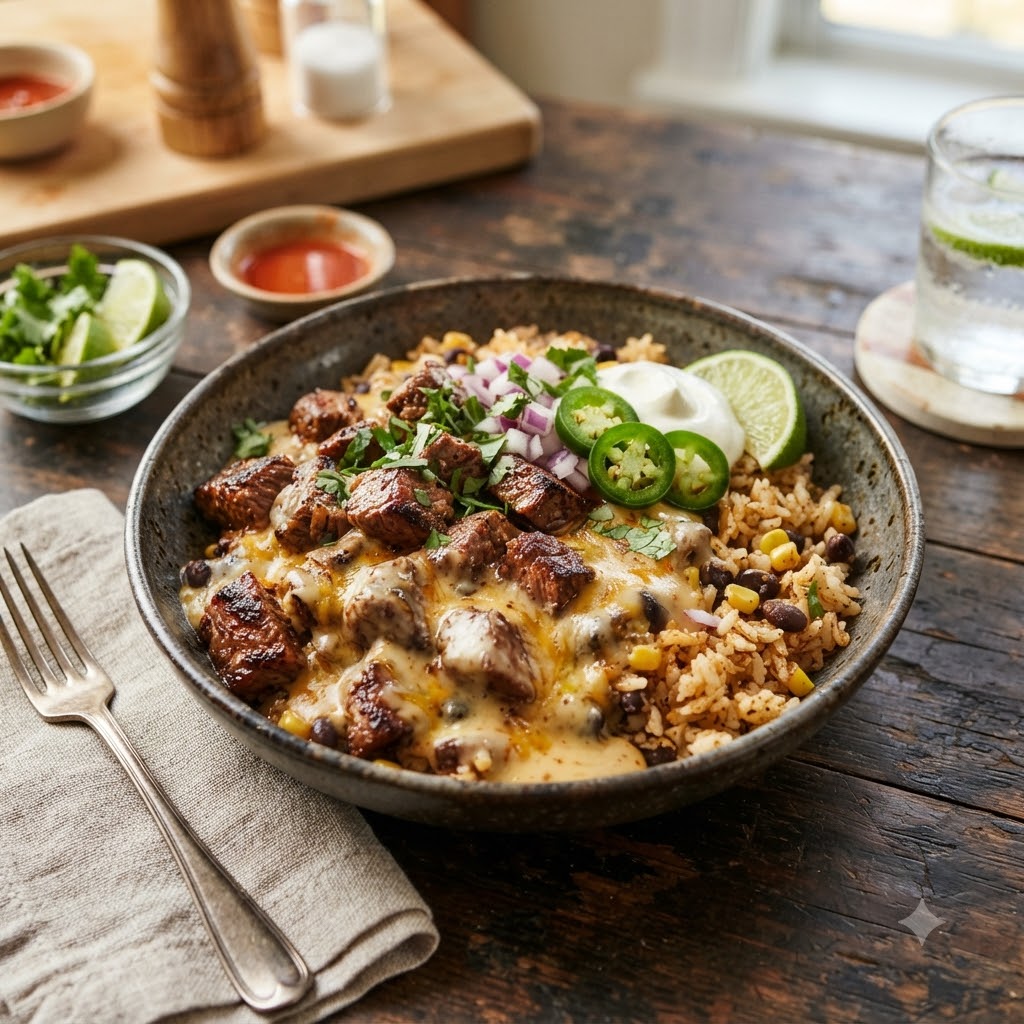
There are few culinary combinations as universally comforting and deeply satisfying as the trio of savory steak, creamy queso, and fluffy rice. Steak Queso Rice represents the pinnacle of Tex-Mex fusion comfort food. It is a dish that bridges the gap between a hearty family dinner and a festive gathering staple. Imagine biting into tender, seared strips of beef that are generously coated in a velvety, warm cheese sauce, all resting on a bed of perfectly seasoned, aromatic rice. It is a flavor explosion that balances the saltiness of the meat with the richness of the cheese and the neutral, textural base of the grain.
This dish has surged in popularity recently, becoming a favorite for meal preppers, busy parents, and foodies alike. It is versatile enough to be served in a bowl, stuffed into a burrito, or eaten straight from the skillet. Whether you are looking to recreate a restaurant favorite at home or simply need a reliable “crowd-pleaser” recipe that requires minimal effort for maximum reward, Steak Queso Rice is the ultimate solution. In this comprehensive guide, we will explore every facet of this delicious creation, from its historical roots to the science behind the perfect cheese sauce.
The History
To understand Steak Queso Rice, one must look at the convergence of two distinct culinary traditions: the American South’s love for gravy and rice, and the Mexican-American tradition of queso fundido and fajitas.
The Evolution of Queso: While cheese dips have existed in Mexico for centuries (often using native cheeses like Chihuahua or Asadero), the bright yellow, processed cheese dip known simply as “Queso” in the United States is a distinctly American invention. It gained massive popularity in the mid-20th century in Texas, evolving from a simple melted cheese topping to a complex sauce often made with tomatoes, peppers, and milk.
The Steak Connection: As Tex-Mex cuisine evolved, the “Fajita” became a staple. Traditionally, skirt steak was the cut of choice. As these flavors migrated into home kitchens, cooks began looking for ways to make the meal more filling and cost-effective. Adding rice was a natural progression, turning a protein-centric dish into a complete carbohydrate-heavy meal. The addition of the queso sauce transformed the dish from a standard “steak and rice” dinner into a decadent, saucy experience that mimics the indulgence of nachos but in a bowl format.
Ingredients Breakdown
The magic of Steak Queso Rice lies in the quality and interaction of its three main pillars. Here is a deep dive into what makes each component work.
1. The Steak
The choice of beef dictates the texture of your dish. While you can use various cuts, the goal is a cut that sears well and remains tender when sliced.
- Sirloin Tip or Top Sirloin: This is the most popular choice for this recipe. It offers a robust beefy flavor and is leaner than ribeye but remains tender if not overcooked. It is also more budget-friendly.
- Ribeye: For a luxurious version, ribeye provides incredible marbling. The fat renders down, adding extra richness to the queso sauce. However, it is significantly more expensive.
- Flank or Skirt Steak: These cuts have a looser grain and absorb marinades beautifully. They require slicing against the grain to ensure tenderness.
2. The Queso Sauce
This is the heart of the dish. A good queso sauce must be smooth, not grainy, and possess a balance of heat and creaminess.
- The Cheese Base: Many home cooks use processed cheese blocks (like Velveeta) because they contain emulsifiers that prevent separation. However, a “from-scratch” approach using sharp cheddar, Monterey Jack, and American cheese provides a superior flavor profile.
- The Liquid: Evaporated milk is the secret weapon. It provides creaminess without the water content of regular milk, which can make the sauce runny. Heavy cream can also be used for an ultra-rich texture.
- The Flavor Agents: Diced green chiles (like Ro*Tel) add necessary acidity and a mild kick. Spices like cumin, paprika, and garlic powder round out the savory notes.
3. The Rice
The rice acts as the sponge for the sauce.
- Long Grain White Rice: The standard choice. It stays fluffy and separate, allowing the sauce to coat each grain without turning into mush.
- Jasmine or Basmati: These aromatic rices add a floral note that pairs surprisingly well with the savory beef.
- Cilantro Lime Rice: For a fresher take, cooking the rice with lime juice and cilantro cuts through the heaviness of the cheese.
Step-by-Step Recipe
Creating the perfect bowl of Steak Queso Rice is a process of timing and heat management. Follow this narrative walkthrough to ensure success.
Phase 1: Preparation and Marination
Begin by preparing your steak. Slice your chosen cut into thin strips against the grain. In a bowl, toss the steak strips with a mixture of olive oil, salt, black pepper, garlic powder, and a touch of cumin. Let this sit for at least 15 minutes while you prepare the rest of the ingredients. This allows the salt to penetrate the meat, ensuring it is seasoned throughout, not just on the surface.
Phase 2: Cooking the Rice
While the steak rests, start your rice. Rinse your long-grain white rice under cold water until the water runs clear; this removes excess starch and prevents gummy rice. In a saucepan, combine the rice with water (or beef broth for extra flavor) in a 1:2 ratio. Bring to a boil, then immediately reduce the heat to low, cover, and simmer for 18-20 minutes. Do not lift the lid! Once the liquid is absorbed, remove from heat and let it steam, covered, for another 5 minutes. Fluff with a fork.
Phase 3: Searing the Steak
Heat a large skillet or cast-iron pan over medium-high heat. Add a tablespoon of oil. Once the oil is shimmering, add the steak strips in a single layer. Do not overcrowd the pan, or the meat will steam instead of sear. Cook for 2-3 minutes per side until a nice brown crust forms and the interior is medium-rare to medium. Remove the steak from the pan and set it aside on a plate. Crucial Step: Do not wipe the pan clean; the browned bits (fond) left behind are flavor gold for the next step.
Phase 4: The Queso Construction
In the same skillet (medium-low heat), add a little butter. Sauté diced onions and bell peppers until soft. Add minced garlic and cook for 30 seconds until fragrant. Pour in your evaporated milk and the can of diced green chiles (with juices). Stir well. Gradually add your shredded cheese, a handful at a time, stirring constantly until melted and smooth. If the sauce is too thick, add a splash of milk. If too thin, let it simmer gently.
Phase 5: Assembly
Return the cooked steak (and any accumulated juices) to the skillet with the queso sauce. Toss gently to coat the meat in the cheese. Serve immediately over the fluffy beds of rice. Top with fresh cilantro, diced tomatoes, or a dollop of sour cream.
Tips
- Grate Your Own Cheese: Pre-shredded bagged cheese is coated in potato starch to prevent clumping, which prevents it from melting smoothly. Buying a block of cheddar and grating it yourself results in a silkier sauce.
- Low and Slow for Cheese: Never boil your cheese sauce. High heat causes the proteins in the cheese to tighten and squeeze out fat, resulting in a greasy, grainy mess. Melt over low heat.
- Rest the Meat: Even though you are slicing the steak thin, letting it rest for 5 minutes after searing allows the juices to redistribute. If you cut it immediately, the juices will run out into the pan, drying out the meat.
- Acid is Key: Queso is rich and fatty. A squeeze of fresh lime juice right before serving brightens the entire dish and cuts through the heaviness.
Variations and Customizations
Steak Queso Rice is a blank canvas. Here are several ways to customize it to your dietary needs or flavor preferences:
1. The “Fajita” Style
Sauté sliced bell peppers and onions alongside the steak. Use a fajita seasoning blend on the meat. Serve with warm tortillas on the side to make mini tacos with the rice and queso mixture.
2. The Spicy Kick
For heat lovers, add diced jalapeños to the cheese sauce. You can also incorporate a dash of cayenne pepper, chipotle powder, or a few dashes of hot sauce (like Cholula or Tapatio) into the queso.
3. The Healthy Swap
Replace white rice with cauliflower rice to significantly lower the carbohydrate count. Use lean sirloin and substitute half the cheese in the sauce with pureed butternut squash or Greek yogurt to reduce fat while maintaining creaminess.
4. The Breakfast Version
Swap the steak for chorizo or breakfast sausage. Top the queso rice with a fried egg. This makes for an incredible weekend brunch dish.
Health Considerations and Nutritional Value
It is important to approach Steak Queso Rice with an understanding of its nutritional profile. This is an indulgent dish, high in calories, fats, and sodium.
- Calories: A standard serving can range from 600 to 900 calories, depending on the portion size of the rice and the amount of cheese used.
- Protein: This dish is an excellent source of protein due to the steak, offering roughly 30-40g per serving, which aids in muscle repair and satiety.
- Fats: The saturated fat content is high due to the beef marbling and dairy. While delicious, those monitoring heart health should enjoy this in moderation.
- Carbohydrates: White rice is a high-glycemic carbohydrate. Pairing it with the protein and fat helps slow digestion, but diabetics should be mindful of portion sizes.
Moderation Tip: To make this healthier, increase the ratio of vegetables (peppers, onions, spinach) to rice and cheese. This adds volume and fiber without adding significant calories.
Ingredients
- For the Steak:
- 1 lb Sirloin or Ribeye steak, sliced into thin strips
- 1 tbsp Olive oil
- 1 tsp Salt
- 1 tsp Black pepper
- 1 tsp Garlic powder
- 1 tsp Cumin
- For the Rice:
- 1 cup Long-grain white rice, uncooked
- 2 cups Water or Beef Broth
- 1/2 tsp Salt
- For the Queso Sauce:
- 1 tbsp Butter
- 1/2 cup Onion, diced
- 1/2 cup Bell Pepper, diced
- 2 cloves Garlic, minced
- 1 can (10 oz) Diced Tomatoes with Green Chiles (e.g., Ro*Tel), undrained
- 1 cup Evaporated Milk
- 3 cups Sharp Cheddar Cheese, shredded (divided)
- 1 cup Monterey Jack Cheese, shredded
- 1/2 tsp Paprika
- Fresh Cilantro for garnish
Directions
- Prep the Rice: Rinse the rice thoroughly. In a medium pot, combine rice, water (or broth), and salt. Bring to a boil, reduce heat to low, cover, and simmer for 18 minutes. Remove from heat and let stand covered for 5 minutes. Fluff with a fork.
- Season the Steak: In a bowl, toss the steak strips with olive oil, salt, pepper, garlic powder, and cumin. Set aside.
- Sear the Meat: Heat a large skillet over medium-high heat. Add steak strips in a single layer. Sear for 2-3 minutes per side until browned and cooked to desired doneness. Remove steak from pan and set aside.
- Sauté Aromatics: In the same skillet, reduce heat to medium. Add butter. Sauté onions and bell peppers until soft (about 5 minutes). Add garlic and cook for 1 minute.
- Make the Sauce Base: Stir in the diced tomatoes with green chiles and the evaporated milk. Bring to a gentle simmer.
- Melt the Cheese: Reduce heat to low. Gradually add the shredded cheddar and Monterey Jack cheese, stirring constantly until the sauce is smooth and melted. Stir in paprika.
- Combine: Add the cooked steak back into the skillet with the queso sauce. Toss to coat evenly. Warm through for 1-2 minutes.
- Serve: Spoon the rice into bowls. Top generously with the steak and queso mixture. Garnish with fresh cilantro.
FAQ
Can I freeze Steak Queso Rice?
While you can freeze the steak and rice separately, freezing the queso sauce is not recommended. Dairy-based sauces tend to separate and become grainy when thawed and reheated. It is best enjoyed fresh or stored in the refrigerator for up to 3 days.
My queso sauce is too thick. What do I do?
Simply whisk in a tablespoon of milk or evaporated milk at a time until you reach your desired consistency. Remember that the sauce will thicken slightly as it cools.
Can I use ground beef instead of steak?
Absolutely. Ground beef is a budget-friendly and delicious alternative. Brown the ground beef with onions and taco seasoning before adding it to the cheese sauce. This variation is often called “Queso Beef Rice.”
How do I reheat leftovers without the cheese separating?
Reheat gently in the microwave at 50% power, stirring every 30 seconds. Alternatively, reheat in a skillet on the stove over low heat, adding a splash of milk to help emulsify the sauce again.
Summary
Steak Queso Rice is the ultimate comfort food fusion, combining tender seared beef, velvety homemade cheese sauce, and fluffy rice into one satisfying bowl. By mastering the balance of spices and using quality ingredients like evaporated milk and freshly grated cheese, you can create a restaurant-quality meal at home that is perfect for family dinners or game day gatherings.