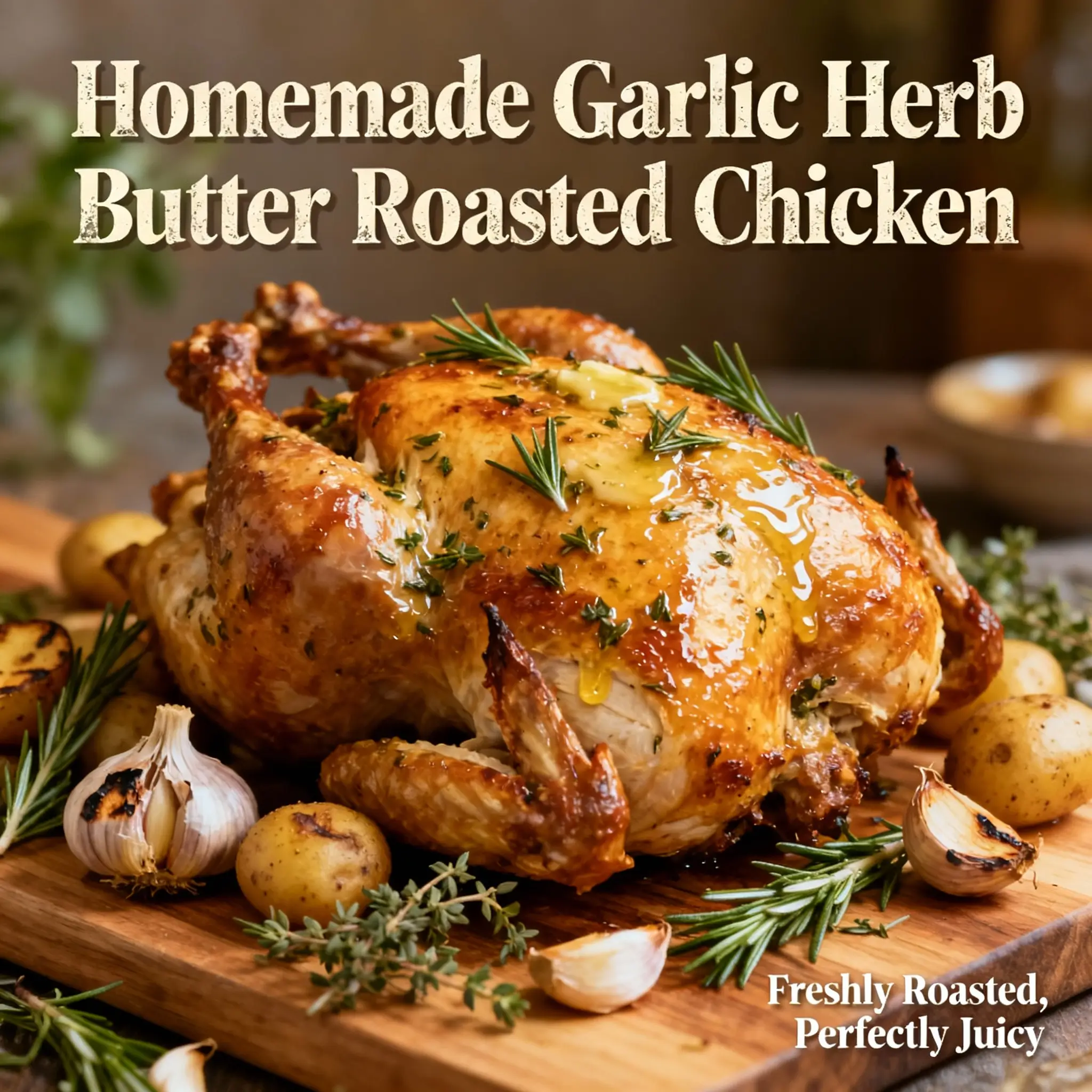
Garlic Herb Butter Roasted Chicken: A Flavorful Classic
There are few dishes that evoke comfort, warmth, and culinary satisfaction quite like a perfectly roasted chicken. Among the most beloved variations is Garlic Herb Butter Roasted Chicken—a succulent, golden-brown masterpiece infused with aromatic garlic, fragrant herbs, and rich buttery goodness. Whether you’re preparing a family dinner, hosting guests for Sunday supper, or simply treating yourself to a restaurant-quality meal at home, this dish delivers on every level. With its crisp skin, juicy meat, and deeply savory aroma, it’s no wonder this recipe has become a staple in kitchens around the world.
The History of Roast Chicken
Roast chicken has deep historical roots stretching back thousands of years. Evidence suggests that domesticated chickens were being cooked over open fires as early as 1500 BCE in regions such as India and Southeast Asia. As trade routes expanded and cultures intermingled, the practice of roasting poultry evolved into an art form. In ancient Rome, chickens were seasoned with herbs and wine, while medieval European feasts often featured whole roasted birds gilded with saffron and spices.
The modern concept of roast chicken, particularly in Western cuisine, gained prominence during the Victorian era when home ovens became more common. The addition of butter, garlic, and herbs—hallmarks of French and Mediterranean cooking—elevated the humble bird into something truly luxurious. Today, Garlic Herb Butter Roasted Chicken stands as a testament to centuries of culinary refinement, combining rustic simplicity with gourmet flair.
Ingredients Breakdown: What Makes This Chicken Shine?
The magic of this dish lies not just in technique but in the careful selection and balance of ingredients. Each component plays a vital role in building layers of flavor, moisture, and texture:
- Whole Chicken: A 4- to 5-pound (1.8–2.3 kg) chicken is ideal—large enough to feed several people but small enough to cook evenly without drying out.
- Unsalted Butter: Using unsalted butter allows you to control the salt content. It also melts beautifully under heat, basting the chicken from within and creating a rich, glossy finish.
- Fresh Garlic: Minced or thinly sliced, fresh garlic infuses the meat and skin with pungent, earthy notes that mellow and sweeten during roasting.
- Fresh Herbs: A blend of rosemary, thyme, parsley, and sage provides a complex herbal bouquet. These herbs penetrate the skin and cavity, imparting freshness and depth.
- Olive Oil: Used both under the skin and on the exterior, olive oil helps conduct heat and promotes even browning.
- Lemon: Halved lemons placed inside the cavity add brightness, prevent the meat from becoming too rich, and subtly perfume the interior.
- Onion and Carrots: Often used as a roasting bed, these vegetables absorb drippings while adding natural sweetness and preventing the chicken from sticking.
- Salt and Black Pepper: Essential seasonings that enhance all other flavors and help form a crisp, flavorful crust.
Step-by-Step Recipe: Crafting the Perfect Roast
Preparation (30 minutes + optional resting time)
- Preheat Oven: Set your oven to 425°F (220°C). Position the rack in the center to ensure even cooking.
- Prepare the Chicken: Remove the chicken from packaging and take out any giblets. Pat the entire bird dry with paper towels—this is crucial for achieving crispy skin.
- Season Inside: Generously season the cavity with kosher salt and freshly ground black pepper. Insert one halved lemon, a few smashed garlic cloves, and a handful of fresh herbs (such as thyme and rosemary).
- Create the Herb Butter: In a bowl, combine ½ cup (1 stick) softened unsalted butter, 6 minced garlic cloves, 2 tablespoons chopped fresh parsley, 1 tablespoon chopped fresh rosemary, 1 tablespoon chopped fresh thyme, 1 teaspoon lemon zest, ½ teaspoon salt, and ¼ teaspoon black pepper. Mix until smooth and well blended.
- Loosen the Skin: Gently slide your fingers under the breast and thigh skin to separate it from the meat without tearing. This creates pockets for the herb butter to melt directly onto the flesh.
- Apply the Butter: Spoon about three-quarters of the herb butter underneath the skin, spreading it evenly over the breasts and thighs. Rub the remaining butter all over the outside of the chicken.
- Truss the Chicken (Optional): Use kitchen twine to tie the legs together and tuck the wing tips under. Trussing helps the chicken cook evenly and retain its shape.
- Elevate on Vegetables: Place sliced onions, carrots, and celery in a roasting pan. Add a splash of chicken broth or white wine. Set the chicken on top of the vegetables so it roasts above the liquid, allowing air circulation.
- Final Seasoning: Drizzle lightly with olive oil and sprinkle with additional salt and pepper.
Rojesting (Approximately 1 hour 15 minutes)
- Roast Uncovered: Place the chicken in the preheated oven and roast for 15 minutes at 425°F (220°C) to kickstart browning.
- Reduce Heat: Lower the temperature to 375°F (190°C) and continue roasting for about 60 to 75 minutes, or until the internal temperature reaches 165°F (74°C) in the thickest part of the thigh (avoiding bone).
- Baste Occasionally: Every 20–30 minutes, use a spoon or bulb baster to drizzle pan juices over the chicken. This keeps the surface moist and enhances color development.
- Check for Doneness: The juices should run clear when pierced, and the legs will feel loose when wiggled. For accuracy, always use a meat thermometer.
- Rest Before Carving: Transfer the chicken to a cutting board, tent loosely with foil, and let rest for 15–20 minutes. Resting allows juices to redistribute, ensuring moist meat upon slicing.
Tips for Success: Elevating Your Roast Chicken Game
- Dry Skin = Crispy Skin: Always pat the chicken thoroughly dry before seasoning. Moisture is the enemy of crispiness.
- Room Temperature Start: Letting the chicken sit at room temperature for 30–60 minutes before roasting ensures more even cooking.
- Butter Temperature Matters: Softened, not melted, butter is easier to spread under the skin and adheres better.
- Use a Meat Thermometer: Guesswork leads to overcooked chicken. Invest in a reliable instant-read or probe thermometer.
- Don’t Skip the Rest: Cutting too soon causes precious juices to spill out, leaving meat dry.
- Rotate the Pan (if needed): If your oven has hot spots, rotate the pan halfway through cooking for uniform browning.
- Save the Drippings: Strain and use the pan juices as the base for a quick gravy or sauce.
Variations and Customizations: Make It Your Own
One of the greatest strengths of this recipe is its versatility. Feel free to experiment based on dietary preferences, seasonal ingredients, or global inspirations:
- Mediterranean Twist: Add olives, capers, sun-dried tomatoes, and oregano. Serve with roasted potatoes and tzatziki.
- Lemon-Pepper Style: Increase lemon zest and juice, add cracked black pepper, and reduce garlic for a bright, zesty profile.
- Spicy Kick: Mix in crushed red pepper flakes, smoked paprika, or a dash of cayenne into the herb butter.
- Citrus Fusion: Substitute lemon with orange, grapefruit, or lime for a different citrus dimension.
- Herb Swaps: Try tarragon, marjoram, dill, or chives depending on availability and taste preference.
- Dairy-Free Option: Replace butter with high-quality olive oil or vegan butter alternative for a lactose-free version.
- Brined Version: Soak the chicken in a wet brine (water, salt, sugar, herbs) for 4–12 hours before roasting for extra juiciness.
- Smoked Paprika & Cumin: For a Spanish-inspired flavor, incorporate smoked paprika and ground cumin into the rub.
Health Considerations and Nutritional Value
While undeniably delicious, Garlic Herb Butter Roasted Chicken can be adapted to suit various health goals:
- Calories: A 6-ounce (170g) serving with skin contains approximately 400–450 calories, largely from fat and protein.
- Protein Powerhouse: Chicken is an excellent source of lean protein (~35g per serving), supporting muscle repair and satiety.
- Fat Content: Most fat comes from the skin and added butter. Removing the skin reduces saturated fat significantly.
- Heart-Healthy Modifications: Use less butter or replace half with Greek yogurt or avocado oil mayonnaise for creaminess with healthier fats.
- Sodium Control: Opt for low-sodium butter or reduce added salt, especially if using store-bought broth.
- Allergies: Contains dairy (butter); substitute with plant-based alternatives for those with lactose intolerance or milk allergy.
- Balanced Meal Tip: Pair with steamed vegetables, quinoa, or a fresh salad to create a nutritionally balanced plate.
Full Ingredient List
- 1 whole chicken (4–5 lbs / 1.8–2.3 kg)
- ½ cup (1 stick / 113g) unsalted butter, softened
- 6 cloves garlic, minced
- 2 tablespoons fresh parsley, finely chopped
- 1 tablespoon fresh rosemary, finely chopped
- 1 tablespoon fresh thyme leaves
- 1 teaspoon lemon zest
- ½ medium lemon, zested and juiced
- 1 teaspoon kosher salt (plus more for seasoning)
- ¼ teaspoon black pepper (plus more for seasoning)
- 1 large lemon, halved
- 1 large onion, quartered
- 2 carrots, cut into chunks
- 2 celery stalks, cut into chunks
- 2–3 tablespoons olive oil
- 1 cup chicken broth or dry white wine (for roasting pan)
- Kitchen twine (optional, for trussing)
Detailed Directions
- In a mixing bowl, combine softened butter, minced garlic, chopped parsley, rosemary, thyme, lemon zest, lemon juice, 1 tsp salt, and ¼ tsp black pepper. Stir until fully incorporated. Set aside.
- Pat the chicken dry inside and out with paper towels. Season the cavity generously with salt and pepper.
- Stuff the cavity with one halved lemon, 3 smashed garlic cloves, and a few sprigs of fresh herbs.
- Using clean hands, gently loosen the skin over the breasts and thighs by sliding fingers between the skin and meat. Be careful not to tear the skin.
- Spoon about ⅔ of the herb butter mixture under the skin, spreading it evenly over the meat. Massage the outside of the skin to distribute.
- Rub the remaining butter all over the outside of the chicken. Drizzle with olive oil and season liberally with salt and pepper.
- If desired, tie the legs together with kitchen twine and tuck wing tips under the body.
- In a large roasting pan, arrange onion, carrot, and celery pieces. Pour in chicken broth or wine.
- Place the chicken on top of the vegetables, breast-side up.
- Roast in a preheated 425°F (220°C) oven for 15 minutes to sear the surface.
- Reduce heat to 375°F (190°C) and continue roasting for 60–75 minutes, basting every 20–30 minutes with pan juices.
- Begin checking internal temperature after 60 minutes. Insert a meat thermometer into the thickest part of the thigh—it should read 165°F (74°C).
- Once done, remove from oven and transfer to a cutting board. Tent with foil and let rest for 15–20 minutes.
- Carve the chicken using a sharp knife: remove legs, wings, then slice breasts. Serve with roasted vegetables and pan juices.
- Optional: Skim excess fat from the drippings and reduce slightly on the stove for a simple sauce.
Frequently Asked Questions (FAQ)
Q: Can I use dried herbs instead of fresh?
A: Yes, but use about one-third the amount since dried herbs are more concentrated. For example, 1 tablespoon fresh = 1 teaspoon dried.
Q: How do I know when the chicken is fully cooked?
A: The gold standard is an internal temperature of 165°F (74°C) in the thickest part of the thigh. Juices should run clear, and the leg should wiggle freely.
Q: Can I roast a frozen chicken?
A: It’s not recommended. Always thaw completely in the refrigerator (about 24–48 hours) for food safety and even cooking.
Q: Why did my chicken turn out dry?
A: Overcooking is the most common cause. Also, skipping the resting period or not using a thermometer increases risk.
Q: Can I make this ahead of time?
A: You can prepare the herb butter and stuff the chicken a day in advance. Store covered in the fridge. Bring to room temp before roasting.
Q: What can I do with leftovers?
A: Use shredded meat in soups, salads, sandwiches, tacos, pot pies, or casseroles. Store in airtight containers for up to 4 days or freeze for longer storage.
Q: Is it safe to eat pink chicken near the bone?
A: Sometimes darker meat near bones appears pink even when fully cooked. Always rely on temperature rather than color.
Q: Can I cook vegetables underneath?
A: Absolutely! Root vegetables like potatoes, parsnips, and turnips roast beautifully beneath the chicken, absorbing flavorful drippings.
Summary
Garlic Herb Butter Roasted Chicken is a timeless dish that combines simplicity with extraordinary flavor—crisp-skinned, juicy, and infused with garlic and aromatic herbs. Perfect for weeknights or special occasions, it’s a showstopping centerpiece that fills your kitchen with irresistible aromas.