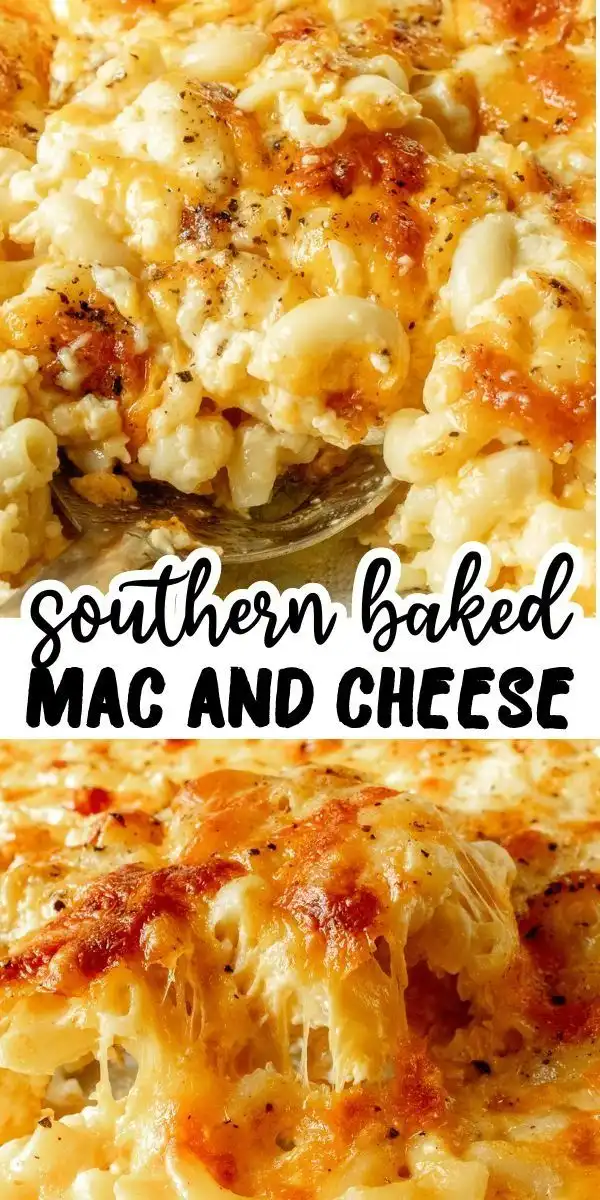
Introduction
Southern Baked Mac and Cheese isn’t just a side dish—it’s a cornerstone of Southern culinary identity, a soul-soothing ritual served at Sunday suppers, holiday feasts, church potlucks, family reunions, and even funerals. Unlike its stovetop or minimalist cousins, the Southern version is a rich, golden-browned, deeply layered celebration of comfort, tradition, and unapologetic indulgence. It’s characterized by its luscious, custard-like interior; a crackling, buttery, crumb-topped crust; and an intricate harmony of multiple cheeses—never just one. This dish transcends mere sustenance: it’s edible heritage, passed down through handwritten index cards, stained recipe notebooks, whispered kitchen wisdom, and generations of “a little bit of this, a pinch of that” intuition. Whether you’re a lifelong Southerner or a curious newcomer, mastering authentic Southern Baked Mac and Cheese means honoring technique, texture, temperature, and tenderness—because in the South, mac and cheese isn’t made; it’s *tended to*.
The History
The roots of Southern Baked Mac and Cheese stretch far deeper than mid-20th-century American casserole culture. Its lineage begins in 14th-century Europe, where pasta and cheese dishes appeared in medieval English and French cookbooks—most notably *The Forme of Cury* (1390), which included a recipe for “makerouns” layered with grated cheese and egg yolks. Thomas Jefferson played a pivotal, often-overlooked role in its American evolution: after encountering pasta during his diplomatic service in Paris and Naples (1784–1789), he imported a pasta machine from Italy and served “macaroni pie” at a White House dinner in 1802—an elegant, French-influenced baked dish likely inspired by Italian timballo or French *macaroni au gratin*. However, it was enslaved African American cooks—whose expertise, creativity, and labor shaped Southern cuisine at every level—who transformed this elite European import into a beloved, accessible, and distinctly Southern staple. Working in plantation kitchens with limited resources but extraordinary ingenuity, they adapted recipes using locally available dairy (often from farmstead cows), seasonal herbs, and pantry staples like cornmeal or crushed crackers for topping. By the late 19th century, macaroni pie appeared in African American community cookbooks such as *What Mrs. Fisher Knows About Old Southern Cooking* (1881)—the first cookbook published by a Black woman in the U.S.—featuring a baked, custard-enriched version. Throughout the Great Migration, Southern Black families carried the dish northward, where it evolved further in urban centers like Chicago and Detroit. The Civil Rights era saw mac and cheese elevated to symbolic status—served at NAACP meetings, Freedom Schools, and voter registration drives—as both nourishment and quiet resistance. Today, it remains a touchstone of cultural pride, featured in James Beard Award-winning cookbooks by Southern chefs like Edna Lewis, Sean Brock, and Toni Tipton-Martin, who continue to reclaim, document, and honor its complex, resilient history.
Ingredients Breakdown
Authentic Southern Baked Mac and Cheese relies on intentional layering—not just of cheese, but of flavor, texture, and function. Every ingredient serves a purpose:
- Pasta: Elbow macaroni is traditional—but not for nostalgia alone. Its short, curved shape traps sauce, holds up to baking without turning mushy, and creates ideal pockets for cheese distribution. High-quality bronze-die extruded pasta (like San Giorgio, Prince, or freshly milled Southern semolina) offers superior water absorption and surface texture for sauce adhesion.
- Milk & Cream: Whole milk provides foundational creaminess and lactose-driven browning, while heavy cream or half-and-half adds unctuous body and richness. Some purists use evaporated milk for concentrated dairy flavor and reduced risk of curdling.
- Cheeses (The Holy Trinity +): A single cheese will never deliver true Southern depth. The classic foundation includes:
- Sharp Cheddar (white or orange): For tang, bite, and structure—aged 18–24 months preferred for crystalline complexity.
- Monterey Jack: For meltability, mild sweetness, and creamy cohesion.
- Colby or Colby-Jack: Adds buttery notes and gentle saltiness without overpowering.
Optional but highly recommended additions: Gouda (smoked or young) for caramelized depth; Fontina for velvety stretch; Muenster for subtle funk; and a whisper of aged Gruyère for nutty umami. *Never use pre-shredded cheese*—anti-caking agents (cellulose, potato starch) inhibit melting and cause graininess.
- Eggs: Not merely a binder—they create the signature custard-like, sliceable interior. Temper them carefully to avoid scrambling.
- Butter: Used both in the sauce (for roux base and finishing richness) and generously in the topping (for browning and crunch).
- Flour: All-purpose flour forms the roux backbone—cooked just long enough to eliminate raw taste but not so long it loses thickening power.
- Aromatics & Seasonings: Onion powder (not fresh onion—too watery), dry mustard (essential for rounding sharp cheese flavors), white pepper (milder, more aromatic than black), cayenne or smoked paprika (for warmth, not heat), and a grating of fresh nutmeg (a secret Southern trick for floral depth).
- Topping: Buttered panko or Ritz cracker crumbs are standard—but variations include crushed Saltines, buttered cornbread crumbs, fried onion strings, or even a layer of thinly sliced potatoes for a “mac and tater” hybrid.
Step-by-Step Recipe
- Prep & Preheat: Position oven rack in the lower third. Preheat oven to 350°F (175°C). Generously butter a 9×13-inch glass or ceramic baking dish (metal conducts heat too quickly, risking burnt edges).
- Cook the Pasta: Bring 6 quarts well-salted water (2 Tbsp kosher salt) to a rolling boil. Add 1 lb elbow macaroni and cook 2 minutes *less* than package directions for al dente—about 6–7 minutes. Drain thoroughly in a colander, rinse *briefly* with warm (not cold) water to remove excess starch, then return to pot. Toss with 1 Tbsp unsalted butter to prevent sticking. Let cool slightly—warm, not hot—before mixing with sauce.
- Make the Roux-Based Sauce: In a heavy-bottomed Dutch oven or large saucepan, melt ½ cup (1 stick) unsalted butter over medium-low heat. Whisk in ¼ cup all-purpose flour and cook, stirring constantly, for 3–4 minutes until golden blonde and fragrant—do not let it brown. Gradually whisk in 2 cups whole milk and 1 cup heavy cream, ensuring no lumps form. Bring to a gentle simmer, whisking frequently, until thickened enough to coat the back of a spoon (~8–10 minutes). Reduce heat to low.
- Season & Temper: Whisk in 2 tsp dry mustard, 1½ tsp onion powder, 1 tsp white pepper, ½ tsp smoked paprika, ¼ tsp cayenne, and a generous grating of fresh nutmeg (about ⅛ tsp). Remove from heat. Temper 3 large eggs: slowly whisk ½ cup of hot sauce into the eggs in a separate bowl, then gradually whisk the egg mixture back into the saucepan. Stir constantly.
- Build the Cheese Matrix: Remove sauce from heat. Stir in cheeses in stages: first the sharper, drier ones (2 cups shredded sharp cheddar), then the softer, melt-prone varieties (1½ cups Monterey Jack, 1 cup Colby). Reserve 1 cup of the cheese blend for the top layer. Stir gently until just combined—do not overmix or overheat, or the sauce may break.
- Combine Pasta & Sauce: Gently fold the warm, drained pasta into the cheese sauce until evenly coated. Avoid vigorous stirring—this preserves texture and prevents glueyness.
- Layer & Top: Transfer mixture to the prepared baking dish. Smooth the top. Sprinkle reserved cheese evenly. For the crown: melt ¼ cup butter and toss with 1 cup panko or crushed Ritz crackers until fully coated. Scatter evenly over the cheese layer.
- Bake with Precision: Place dish on a parchment-lined baking sheet (to catch spills). Bake for 40–45 minutes—until the edges bubble vigorously, the center is set but still slightly jiggly (like firm Jell-O), and the topping is deep golden brown and crisp. Rotate dish halfway through for even browning.
- Rest is Non-Negotiable: Remove from oven and let rest *undisturbed* for a full 20–25 minutes. This allows the custard to fully set, the starches to relax, and the cheese to re-emulsify—ensuring clean, creamy slices instead of a runny mess.
- Serve with Soul: Scoop with a sharp-edged spatula or pie server. Serve warm—not piping hot—and consider pairing with collard greens, fried chicken, or a simple tomato salad with red onion and apple cider vinaigrette.
Tips
- Salting the Pasta Water Like the Ocean: Underseasoned pasta = underseasoned mac. Use 2 Tbsp Diamond Crystal kosher salt per 6 quarts water—equivalent to ~¼ cup Morton’s. This seasons the pasta from within.
- Undercook, Then Rest: Pasta continues to absorb liquid while cooling and baking. Overcooking leads to disintegration. Trust the 2-minute-under rule.
- Roux Temperature Matters: Cook the roux over medium-low—not high heat. A rushed, scorched roux adds bitterness. A pale, nutty roux delivers clean thickening.
- No Microwave Shortcuts: Never microwave cheese sauce. Rapid, uneven heating causes fat separation and graininess. Patience = silk.
- Room-Temp Dairy: Cold milk or cream shocks the roux and causes lumps. Warm dairy (microwave 30 sec) integrates seamlessly.
- Grate Your Own Cheese: Pre-shredded cheese contains cellulose, which absorbs moisture and turns sauces gritty. A box grater or food processor yields superior melt and flavor release.
- Test Doneness with a Knife: Insert a thin paring knife into the center—if it comes out mostly clean with just a trace of moist residue, it’s ready. If wet, bake 5 more minutes.
- Embrace Carryover Cooking: The internal temperature rises 5–7°F during resting. Pull it out when the center still has a slight wobble.
- Reheating Right: To reheat leftovers, cover tightly with foil and warm at 325°F for 20–25 minutes. Add a splash of milk or cream before reheating if dry. Never reheat in the microwave—it makes cheese rubbery.
- Batch Wisdom: Double the recipe? Use two 9×13 dishes—or one 9×13 and one 8×8. Do *not* try to bake double in one pan: uneven heat distribution guarantees burnt edges and a raw center.
Variations and Customizations
Southern Baked Mac and Cheese is gloriously adaptable—rooted in tradition but endlessly inventive. Here are time-tested, regionally inspired riffs:
- Lowcountry Shrimp & Grits Mac: Fold in 1½ cups sautéed Gulf shrimp, ½ cup cooked stone-ground grits, and a swirl of remoulade before baking. Top with pickled okra.
- Smoky Appalachian: Add 2 Tbsp bourbon and 1 tsp liquid smoke to the sauce. Use smoked Gouda and sharp white cheddar. Top with crispy bacon and chopped scallions.
- Creole Mac: Sauté 1 diced bell pepper, 1 small onion, and 2 ribs celery (the “holy trinity”) in butter until soft. Add 1 tsp Creole seasoning and 1 Tbsp tomato paste before building the roux. Finish with a dash of hot sauce.
- Church Picnic Style: Mix in 1 cup diced ham, ½ cup roasted sweet potatoes, and ¼ cup chopped pecans. Top with crushed cornbread and a drizzle of honey-butter glaze.
- Veggie-Forward Greens Mac: Blanch and finely chop 2 cups collard or kale greens. Squeeze dry and fold in with ½ cup crumbled goat cheese and toasted pine nuts.
- Blue Ribbon “Show Mac”: Add 1 cup roasted butternut squash purée and ½ cup crumbled blue cheese to the sauce. Top with candied pecans and thyme.
- Breakfast Mac: Stir in 4 scrambled eggs, ½ cup crumbled breakfast sausage, and ¼ cup shredded cheddar. Bake in individual ramekins with a fried egg on top.
- Seafood Boil Mac: Fold in 1 cup peeled, poached crawfish tails, ½ cup corn kernels, and ¼ cup diced red potato. Finish with Old Bay–buttered crumb topping.
- Vegetarian “Garden Patch”: Add roasted zucchini, cherry tomatoes, caramelized onions, and fresh basil. Use smoked mozzarella and aged provolone.
- “Soul Food Swap”: Substitute ½ cup mashed sweet potatoes for part of the milk/cream for natural sweetness and velvety body—especially popular in Tennessee and Kentucky traditions.
Health Considerations and Nutritional Value
While Southern Baked Mac and Cheese is rightly celebrated as comfort food—not health food—mindful adaptations can honor tradition while supporting wellness goals. A standard 1-cup serving (without meat or extras) contains approximately: 480–520 calories, 28–32g total fat (16–18g saturated), 75–85g carbohydrates (4–6g fiber), 18–22g protein, and 750–900mg sodium. Key considerations:
- Dairy Sensitivity: Lactose-intolerant individuals may tolerate aged cheddars (naturally lower in lactose) or benefit from lactase enzyme supplements taken before eating. Substituting lactose-free milk and cream works well; avoid non-dairy milks unless specifically formulated for cooking (regular almond or oat milk lacks fat and protein for proper emulsion).
- Gluten Concerns: Traditional flour-based roux is not gluten-free. Replace with equal parts gluten-free all-purpose flour or a dedicated GF roux blend (like Better Than Bouillon GF Roux). Certified GF pasta (brown rice, corn, or quinoa elbows) performs admirably when undercooked appropriately.
- Sodium Management: Reduce added salt by 50% and boost flavor with herbs (fresh thyme, chives), citrus zest, nutritional yeast, or a splash of apple cider vinegar at the end. Choose low-sodium cheeses when possible—though flavor impact must be weighed.
- Fat Reduction (Without Sacrifice): Replace ½ cup heavy cream with full-fat Greek yogurt (tempered carefully) or silken tofu purée. Use grass-fed butter and reduce by 1 Tbsp—compensate with extra cheese depth. Never substitute skim milk; it causes sauce breakage and lackluster browning.
- Protein & Fiber Boost: Stir in ½ cup cooked lentils, black beans, or quinoa for plant-based protein and fiber. Add 1 Tbsp ground flaxseed or chia to the crumb topping.
- Portion Mindfulness: Serve in smaller portions (¾ cup) alongside nutrient-dense sides—roasted Brussels sprouts, braised turnip greens, or a vibrant cucumber-tomato-feta salad—to balance the meal holistically.
- Diabetic-Friendly Tweaks: Use whole-grain or legume-based pasta (higher fiber, lower glycemic index). Replace sugar-laden toppings (honey-butter, maple-glazed crumbs) with toasted seeds or herbs. Monitor portion size and pair with lean protein to stabilize blood sugar.
- The “Wellness Paradox”: Research increasingly affirms that culturally significant, joyful foods—eaten mindfully and in community—support metabolic health and longevity more than rigid restriction ever could. Southern Mac and Cheese, enjoyed intentionally and occasionally, belongs in a balanced, soul-nourishing life.
Ingredients
- 1 pound high-quality elbow macaroni (bronze-die extruded preferred)
- 6 quarts cold water
- 2 tablespoons Diamond Crystal kosher salt (or 1 tablespoon Morton’s)
- ½ cup (1 stick) unsalted butter, plus ¼ cup for topping
- ¼ cup all-purpose flour (or gluten-free 1:1 blend)
- 2 cups whole milk, warmed
- 1 cup heavy cream, warmed
- 2 teaspoons dry mustard powder
- 1½ teaspoons onion powder
- 1 teaspoon freshly ground white pepper
- ½ teaspoon smoked paprika
- ¼ teaspoon cayenne pepper (optional, for subtle warmth)
- Generous pinch of freshly grated nutmeg (about ⅛ teaspoon)
- 3 large eggs, room temperature
- 2 cups shredded extra-sharp white or orange cheddar (aged 18+ months)
- 1½ cups shredded Monterey Jack
- 1 cup shredded Colby or Colby-Jack
- 1 cup reserved cheese blend (for topping)
- 1 cup panko breadcrumbs OR 1 cup crushed Ritz crackers
Directions
- Preheat oven to 350°F (175°C). Butter a 9×13-inch baking dish generously.
- Bring 6 quarts water to a vigorous boil. Add 2 Tbsp kosher salt. Add macaroni and cook 2 minutes less than package’s al dente time—typically 6–7 minutes. Drain well in a colander. Rinse briefly with warm water, then return to pot. Toss with 1 Tbsp butter and set aside to cool slightly (5–7 minutes).
- In a heavy Dutch oven over medium-low heat, melt ½ cup butter. Whisk in flour and cook, stirring constantly, for 3–4 minutes until fragrant and pale gold—do not brown.
- Gradually whisk in warmed milk and cream. Bring to a gentle simmer, whisking often, until thickened to coat the back of a spoon (~8–10 minutes). Reduce heat to low.
- Whisk in dry mustard, onion powder, white pepper, smoked paprika, cayenne, and nutmeg. Remove from heat.
- In a small bowl, whisk eggs. Slowly pour ½ cup hot sauce into eggs while whisking. Then slowly whisk egg mixture back into saucepan. Stir constantly.
- Remove from heat. Stir in 2 cups cheddar, 1½ cups Monterey Jack, and 1 cup Colby—reserving 1 cup total for topping. Stir until just melted and smooth.
- Gently fold warm pasta into cheese sauce until fully coated. Transfer to prepared baking dish. Smooth top.
- Sprinkle reserved 1 cup cheese evenly over surface. In a small bowl, melt ¼ cup butter and toss with panko or cracker crumbs until saturated. Scatter evenly over cheese.
- Place dish on a parchment-lined baking sheet. Bake 40–45 minutes, rotating halfway, until edges bubble vigorously, center is set with slight jiggle, and topping is deep golden brown.
- Remove from oven. Rest undisturbed for 20–25 minutes before serving. This step is essential for clean slicing and creamy texture.
FAQ
- Can I make this ahead of time?
- Absolutely—and often better! Assemble completely (through topping), cover tightly with plastic wrap, and refrigerate up to 24 hours. Add 5–10 minutes to bake time if going straight from fridge to oven. For longer storage, freeze unbaked (up to 3 months); thaw overnight in fridge before baking.
- Why does my mac and cheese get grainy or oily?
- Graininess usually results from overheating the cheese sauce (especially above 170°F), using pre-shredded cheese, or adding cold dairy to hot roux. Oil separation occurs when sauce is boiled after cheese is added or when low-moisture cheeses dominate. Always remove from heat before adding cheese, stir gently, and use a blend of high- and low-moisture varieties.
- Can I use different pasta shapes?
- Yes—but choose wisely. Cavatappi, campanelle, or fusilli work beautifully due to their ridges and curves. Avoid long pastas (spaghetti), delicate shapes (orzo), or ultra-thin tubes (ziti)—they either don’t hold sauce or become mushy. Always undercook by 2 minutes regardless of shape.
- My topping isn’t browning. What do I do?
- First, ensure your oven is properly calibrated (use an oven thermometer). If still pale after 45 minutes, broil on LOW for 60–90 seconds—watch constantly. Alternatively, brush topping lightly with melted butter before baking, or add 1 tsp sugar to crumbs for enhanced Maillard reaction.
- Can I add vegetables or meat before baking?
- Yes—but prep matters. Sauté, roast, or blanch veggies first and drain *extremely* well—excess water dilutes sauce and steams the dish instead of baking it. For meats (ham, bacon, sausage), cook and crumble or dice finely. Limit additions to 1½ cups total to preserve structural integrity.
- Is there a “lighter” version that still tastes Southern?
- Yes—with nuance. Try swapping ½ cup cream for low-sodium chicken broth + 2 Tbsp nutritional yeast; use ¾ cup sharp cheddar + 1¼ cups part-skim mozzarella; and add ½ cup puréed cauliflower to the sauce for creaminess without heaviness. The soul remains—the strategy shifts.
- How do I fix a sauce that’s too thick or too thin?
- Too thick? Whisk in warm milk, 1 Tbsp at a time, off heat. Too thin? Make a slurry (1 tsp cornstarch + 1 Tbsp cold milk), whisk into warm (not boiling) sauce, and simmer 2 minutes. Never add raw flour directly.
- Can I make this in individual ramekins?
- Yes—and it’s stunning. Divide among six 6-oz ramekins. Reduce bake time to 25–30 minutes. They’ll have higher crust-to-interior ratio and bake more evenly. Perfect for dinner parties or portion control.
- What’s the best way to store and reheat leftovers?
- Cool completely, then store covered in refrigerator up to 5 days. Reheat in 325°F oven, covered with foil, for 20–25 minutes—or until center reaches 165°F. Add 1–2 tsp milk or cream before reheating if dry. Freeze for up to 3 months (thaw overnight before baking).
- Why does my mac and cheese taste bland?
- Underseasoning is the #1 culprit—especially undersalting the pasta water and skipping the dry mustard or nutmeg. Also, using mild, young cheeses lacks depth. Taste the sauce *before* adding pasta—you should find it boldly seasoned, as pasta dilutes flavor.
Summary
Southern Baked Mac and Cheese is a profound expression of heritage, hospitality, and culinary craftsmanship—built on slow-cooked roux, hand-grated multi-cheese layers, perfectly al dente pasta, and a reverent 20-minute rest that transforms it from casserole to cathedral of comfort. It is equally at home beneath magnolia trees at a Juneteenth picnic and on a stainless-steel counter in a James Beard-nominated kitchen—united by butter, belief, and the bold, beautiful truth that some traditions aren’t meant to be modernized, but meticulously, lovingly, passed on.