Introduction
Poor Man’s Cake—also affectionately known as “Depression Cake,” “Wartime Cake,” “No-Egg Cake,” “Boiled Water Cake,” or “Water Cake”—is more than just a dessert; it’s a poignant edible artifact of American resilience. Born in the economic desolation of the Great Depression (1929–1939) and enduring through the material scarcities of World War II, this humble, one-bowl cake emerged not from culinary whimsy but from sheer necessity. At a time when sugar was rationed, butter was scarce, eggs were luxury items saved for barter or essential nutrition, and dairy was often unaffordable or unavailable, home bakers turned ingenuity into sustenance. With no eggs, no butter, no milk—and sometimes even no baking powder—this cake relied on pantry staples that remained accessible to working-class families: flour, brown sugar, cocoa, vinegar, and boiling water. Its moist, dense crumb and deep chocolate flavor belie its austere origins, transforming austerity into comfort with remarkable elegance. Today, Poor Man’s Cake stands as both a historical touchstone and a surprisingly relevant recipe—resonating with modern bakers seeking budget-friendly, vegan, allergy-conscious, or minimalist baking solutions.
The History
The origins of Poor Man’s Cake are deeply rooted in the socio-economic soil of early 20th-century America. While precursors to eggless, dairy-free cakes existed in 19th-century “vinegar cakes” and “milkless cakes” found in rural community cookbooks, the version widely recognized today coalesced during the Great Depression. As unemployment soared past 25%, family incomes plummeted, and food budgets shrank to pennies per day, recipes began appearing in women’s magazines, church bulletins, extension service pamphlets (like those from the USDA Cooperative Extension), and newspaper columns under names like “Economical Chocolate Cake” and “Thrift Cake.” Notably, the 1931 edition of the Good Housekeeping Cook Book included a “Boiling Water Cake” using hot coffee and vinegar—evidence of early adaptation. During WWII, the U.S. Office of Price Administration (OPA) enforced strict rationing: sugar coupons limited households to just ½ pound per person per week, butter was capped at ½ pound monthly, and eggs were frequently diverted to military kitchens or sold on the black market. In response, home economists—including wartime nutritionists like Dr. Louise Stanley, U.S. Department of Agriculture Chief of the Bureau of Home Economics—published simplified, resource-conscious recipes emphasizing shelf-stable ingredients and chemical leavening alternatives. Poor Man’s Cake became emblematic of what historian Laura Shapiro calls “the quiet heroism of domestic labor”: a daily act of care, creativity, and quiet defiance against deprivation. Regional variations proliferated—Appalachian versions used sorghum syrup; Midwestern iterations added mashed bananas or crushed crackers for texture; Southern adaptations sometimes included buttermilk when available—but the core formula endured: dry ingredients mixed cold, wet ingredients boiled, then combined for immediate baking. Its legacy lives on not only in vintage recipe boxes but also in contemporary food justice movements, zero-waste kitchens, and vegan bakeries honoring its plant-based integrity long before it was trendy.
Ingredients Breakdown
Every ingredient in Poor Man’s Cake serves a precise functional and historical purpose—nothing is extraneous, and substitutions reflect both scarcity and science:
- All-Purpose Flour (2 cups): The structural backbone. During the Depression, many families milled their own wheat or purchased bulk flour in 25- or 50-pound sacks. Unbleached, low-protein flour was common—contributing to the cake’s tender yet slightly coarse crumb. Modern all-purpose works perfectly; whole wheat pastry flour may be substituted up to 50% for added fiber and nuttiness (though it yields a denser result).
- Granulated Sugar (1 cup): A luxury in rationed times—often stretched by combining with brown sugar or molasses. Granulated provides consistent sweetness and aids in caramelization and crust formation. Brown sugar (¾ cup packed) may replace it entirely for deeper molasses notes and extra moisture, though it may darken the cake significantly.
- Unsweetened Cocoa Powder (¼ cup, natural—not Dutch-process): Critical for both flavor and acid balance. Natural cocoa is acidic and reacts robustly with baking soda and vinegar—essential for lift without eggs. Dutch-process cocoa is alkalized and neutral; using it without adjusting leaveners will yield a flat, gummy cake. Historic brands like Hershey’s “Original Cocoa” (introduced 1907) were natural and widely available—even during shortages—making them the default choice.
- Baking Soda (1 tsp): The primary leavener. It requires an acid (here: vinegar + natural cocoa) and heat to produce carbon dioxide. Unlike baking powder—which contains its own acid and was less reliably stocked in rural areas—baking soda was inexpensive, shelf-stable, and commonly used for everything from cleaning to cooking.
- Salt (½ tsp): Enhances flavor perception and tempers sweetness. In eras when iodized salt was newly introduced (1924), it also provided critical micronutrition—especially vital where diets lacked variety.
- Vinegar (1 tbsp, white or apple cider): The secret catalyst. Its acetic acid rapidly activates baking soda upon contact, creating immediate bubbles that aerate the batter. Historically, vinegar was ubiquitous—homemade from apple scraps or purchased in bulk—and served dual roles: leavener and preservative. Apple cider vinegar adds subtle fruitiness; white vinegar offers clean acidity. Lemon juice (1 tbsp) is a period-accurate substitute.
- Vegetable Oil (⅓ cup): A Depression-era innovation. While lard and shortening were more common in 1930s baking, refined cottonseed oil (marketed as “Crisco” starting in 1911) gained popularity for its neutral taste, affordability, and long shelf life. Oil ensures moisture retention far better than solid fats in low-egg formulations and prevents staling. Bacon grease or melted lard were used in some rural variants—adding savory depth—but oil remains the standard for consistency and accessibility.
- Vanilla Extract (1 tsp): A small indulgence—often homemade from vanilla beans steeped in alcohol or glycerin—used sparingly to elevate the sensory experience. Imitation vanilla was widely available and affordable; pure extract was a treat reserved for special occasions.
- Boiling Water (1 cup + 2 tbsp, or hot strong coffee for enhanced flavor): The transformative agent. Pouring boiling liquid over the dry ingredients gelatinizes starches, blooms cocoa, and creates a thin, smooth batter. This technique—called “hot water method”—maximizes hydration without overmixing, prevents gluten overdevelopment, and produces an exceptionally moist, fine-grained crumb. Coffee intensifies chocolate notes (a trick used since the 1920s) and was often on hand—even instant coffee crystals were rationed but reused multiple times.
Notably absent—and intentionally so—are eggs (which provide structure, emulsification, and leavening), dairy (milk, buttermilk, or sour cream—which add tenderness and acidity), and butter (which contributes flavor, moisture, and richness). Their omission wasn’t oversight—it was adaptation.
Step-by-Step Recipe
- Preheat & Prep: Position oven rack in the center. Preheat oven to 350°F (175°C). Generously grease a 9×13-inch metal baking pan (glass or ceramic may be used, but reduce temperature to 325°F and extend baking time by 5–8 minutes). For best release and easy cleanup, line the pan with parchment paper, leaving a 2-inch overhang on two opposite sides.
- Mix Dry Ingredients: In a large, heatproof mixing bowl (stainless steel or tempered glass—avoid plastic, which can warp), whisk together 2 cups all-purpose flour, 1 cup granulated sugar, ¼ cup natural unsweetened cocoa powder, 1 teaspoon baking soda, and ½ teaspoon salt until fully homogenous and no cocoa lumps remain. Whisking *before* adding liquids prevents clumping and ensures even distribution of leaveners.
- Combine Wet Ingredients: In a separate small saucepan or heat-safe measuring cup, combine ⅓ cup vegetable oil, 1 tablespoon vinegar, 1 teaspoon vanilla extract, and 1 cup plus 2 tablespoons boiling water (or hot brewed coffee). Stir gently until oil is fully emulsified into the water—no need to boil again; just ensure uniform blending.
- Combine Hot Liquid with Dry Mixture: Carefully pour the hot liquid mixture over the dry ingredients. Using a sturdy silicone spatula or wooden spoon, stir *just until combined*—approximately 15–20 strokes. Do not overmix. Batter will be very thin, almost like pancake batter—this is correct and essential for proper rise and texture. A few small lumps are acceptable; overmixing develops gluten and yields toughness.
- Pour & Smooth: Immediately pour batter into the prepared pan. Gently tap the pan once or twice on the counter to release large air bubbles. Use the spatula to evenly spread batter into corners—do not scrape every last drop; residual batter in the bowl helps prevent overfilling.
- Bake with Precision: Place pan in preheated oven. Bake for 30–38 minutes—timing varies significantly by oven calibration, pan material, and altitude. Begin checking at 30 minutes: the cake is done when a toothpick inserted 2 inches from the edge comes out with *moist crumbs* (not wet batter), and the center springs back lightly when touched. Edges should appear set and slightly pulling away from the pan. Avoid opening the oven door before 25 minutes—temperature fluctuations cause collapse.
- Cool Strategically: Remove cake from oven and place pan on a wire cooling rack. Let cool in pan for exactly 20 minutes—this allows structure to set while retaining internal moisture. After 20 minutes, use parchment overhang to carefully lift cake onto the rack. Peel off parchment and cool completely (at least 1.5 hours) before frosting or slicing. Cutting too soon releases steam and causes gumminess.
Tips
- Altitude Adjustment: Above 3,000 feet? Increase baking soda to 1¼ tsp, reduce sugar to ¾ cup, and add 1 extra tablespoon boiling water to compensate for faster evaporation and weaker air pressure.
- Oven Thermometer Essential: Many vintage ovens run hot or cold. A standalone oven thermometer is non-negotiable—Poor Man’s Cake’s delicate chemistry fails dramatically at even 25°F variance.
- Do Not Substitute Baking Powder for Baking Soda: They are chemically distinct. If you must use baking powder, use 3 tsp *double-acting* baking powder—and omit the vinegar. But expect reduced rise and altered flavor. True authenticity requires the soda-vinegar-cocoa reaction.
- Boiling Water Must Be Boiling: Microwaved or “hot” (not boiling) water won’t properly hydrate cocoa or activate starches. Use a kettle brought to a full, rolling boil.
- Room-Temperature Ingredients Are Irrelevant Here: Unlike traditional cakes, cold oil or refrigerated vinegar work perfectly—the reaction depends on heat, not ambient temperature.
- Stirring Technique Matters: Fold, don’t beat. Use a “figure-8” motion with the spatula, reaching into the bottom of the bowl, to incorporate without agitation. Overmixing = rubbery cake.
- Storage Wisdom: Unfrosted cake stays moist for 4 days at room temperature in an airtight container. Refrigeration dries it out; freezing is excellent—wrap cooled, unfrosted cake tightly in plastic + foil and freeze up to 3 months. Thaw overnight in fridge, then bring to room temp before serving.
- Make-Ahead Batter? No. The chemical reaction begins instantly upon mixing. Batter must go into the oven within 2 minutes—or leavening gases escape, resulting in poor volume.
- Pan Size Flexibility: Can be baked in two 9-inch round pans (reduce time to 22–28 minutes) or as cupcakes (18–22 minutes). Adjust accordingly and always test doneness.
- Historic Baking Note: Many Depression-era cooks baked in wood-fired or coal stoves. They judged doneness by inserting a clean broom straw—if it emerged dry, the cake was done. You can replicate this low-tech test if your toothpick isn’t handy!
Variations and Customizations
Poor Man’s Cake was never a monolith—it was a template, endlessly adapted to regional resources, seasonal abundance, and family tradition. Below are historically grounded and modern-enhanced variations—all maintaining the core no-egg, no-dairy, no-butter integrity:
- Spiced Depression Cake: Add 1 tsp ground cinnamon, ¼ tsp ground cloves, and ¼ tsp freshly grated nutmeg to dry ingredients. Serve warm with a spoonful of applesauce—a nod to New England harvest traditions.
- Orange-Cocoa Variation: Replace vinegar with 1 tbsp fresh orange juice and add 1 tsp finely grated orange zest to wet ingredients. Pair with a simple orange glaze (powdered sugar + orange juice) for brightness—an homage to citrus-growing regions where oranges were more accessible than chocolate.
- Nutty Appalachian Version: Fold in ½ cup chopped walnuts or pecans (toasted for depth) after combining batter. Some Kentucky hill families added a handful of crushed saltine crackers for textural contrast—a frugal crunch substitute for expensive nuts.
- Fruit-Enhanced “Garden Cake”: Stir in 1 cup mashed very ripe bananas, ¾ cup unsweetened applesauce, or ½ cup cooked and drained stewed prunes. Reduce boiling water to ¾ cup to maintain batter consistency. Reflects Victory Garden abundance.
- “Coffeehouse” Upgrade: Replace boiling water with 1 cup hot strong brewed coffee *and* add 2 tsp instant espresso powder to dry ingredients. Top with a dusting of cocoa and flaky sea salt—elevating simplicity into sophistication.
- Vegan Frosting Pairings: While traditionally served plain or with powdered sugar, modern interpretations include:
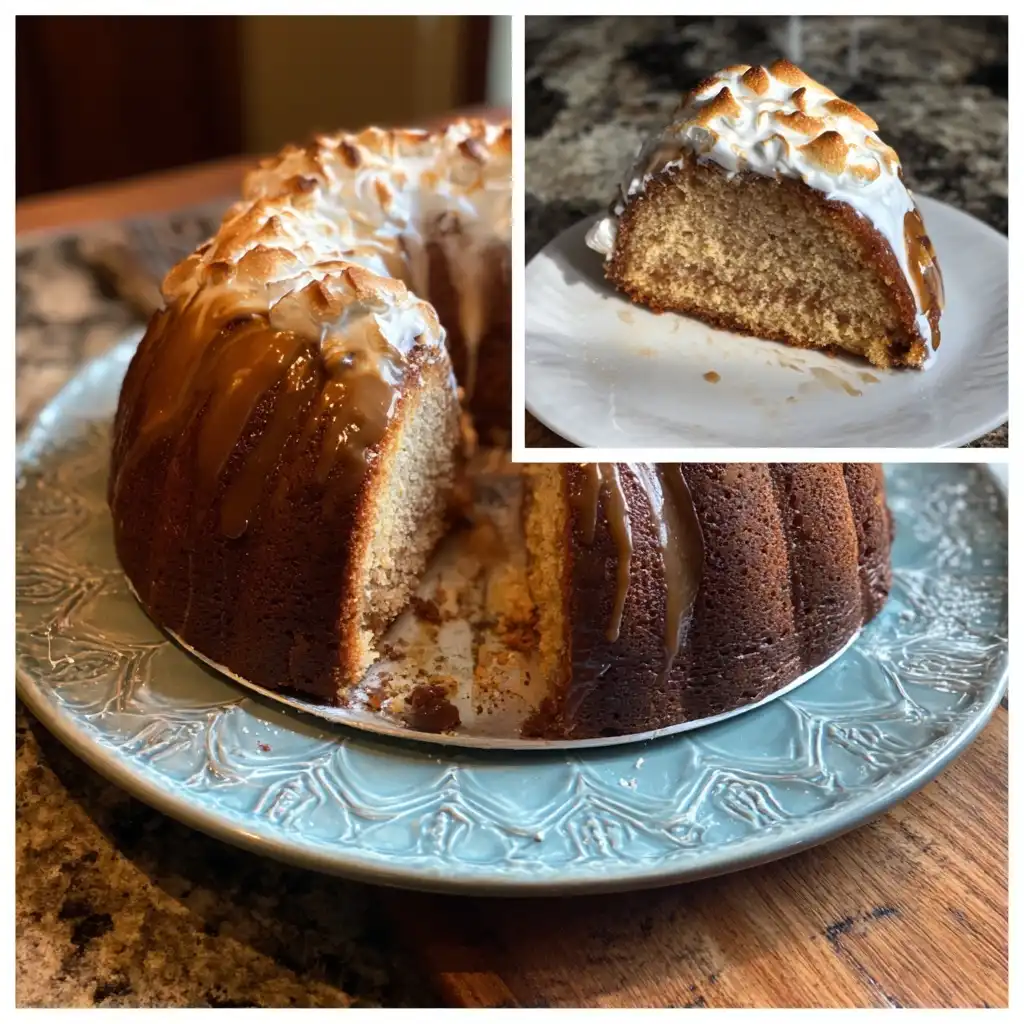
- Boiled Caramel Icing: Simmer ½ cup brown sugar, ¼ cup nondairy milk (soy or oat), 1 tbsp vegan butter, and 1 tsp vanilla until thickened (5–7 min); cool slightly before drizzling.
- Chocolate Ganache (Oil-Based): Heat ½ cup full-fat coconut milk (canned) until steaming; pour over 1 cup chopped dairy-free chocolate; stir until glossy. Chill 20 min, then whip.
- Seven-Minute Fluff: Whisk 2 egg whites’ worth of aquafaba (½ cup chickpea brine) with ½ cup sugar and ¼ tsp cream of tartar over simmering water for 7 minutes until stiff—then fold in 1 tsp vanilla and 2 tbsp cocoa.
- Gluten-Free Adaptation: Substitute 2 cups measure-for-measure gluten-free flour blend (with xanthan gum included). Add ½ tsp xanthan gum if blend doesn’t contain it. Increase boiling water by 1 tbsp. Expect slightly denser crumb—best served warm with fruit compote.
- Lower-Sugar Option: Reduce granulated sugar to ¾ cup and add 2 tbsp blackstrap molasses for mineral richness and moisture. Flavor becomes robust and earthy—ideal with a dollop of cultured coconut yogurt.
- “Ration-Rewritten” Savory-Sweet Loaf: Omit cocoa and vanilla; increase cinnamon to 2 tsp and add ½ cup dried currants + ¼ cup toasted sunflower seeds. Bake in a loaf pan—served toasted with vegan butter. Inspired by British “War Loaves” repurposed for sweets.
- Historic “Church Social” Presentation: After cooling, cut into 2-inch squares and dip each in melted paraffin wax (a Depression-era preservation method) for portable, non-perishable treats—still practiced in some Southern congregations today.
Health Considerations and Nutritional Value
A single 2×2-inch slice (1/16th of the 9×13 pan, unfrosted) contains approximately:
- Calories: 185 kcal
- Total Fat: 7.2 g (1.1 g saturated)
- Carbohydrates: 30.5 g (21.3 g sugars, 1.1 g fiber)
- Protein: 2.4 g
- Sodium: 155 mg
- Iron: 1.8 mg (10% DV)
- Magnesium: 32 mg (8% DV)
- Antioxidants: Rich in flavonoids from natural cocoa—linked to improved endothelial function and reduced oxidative stress.
Notable Health Attributes:
- Vegan & Allergen-Conscious: Naturally free of dairy, eggs, soy (if using soy-free oil), and nuts (unless added)—making it ideal for multiple dietary restrictions including lactose intolerance, egg allergy, and vegan lifestyles.
- No Cholesterol: Plant-based fats mean zero dietary cholesterol—a heart-health advantage over traditional butter- and egg-heavy cakes.
- Lower in Saturated Fat: Compared to butter-based equivalents (which average 5–6 g sat fat per slice), this version relies on heart-healthier unsaturated oils.
- Mineral-Rich Cocoa: Natural cocoa provides non-heme iron, magnesium, and potassium—nutrients often lacking in highly processed desserts.
- No Artificial Preservatives or Emulsifiers: When made from scratch with whole ingredients, it avoids the additives common in commercial mixes.
Considerations & Mindful Enjoyment:
- Sugar Content: While modest per slice, the cake is still a dessert—not a health food. Those managing diabetes or insulin resistance may benefit from the lower-sugar variation with molasses and increased fiber.
- Glycemic Impact: The absence of protein and fat means quicker blood sugar elevation. Serving with a handful of almonds or a side of Greek yogurt balances the glycemic load.
- Gluten Sensitivity: As written, it contains gluten. The GF variation is safe for celiac disease only when certified GF ingredients and dedicated equipment are used.
- Historical Context Matters: While nutritionally modest by modern standards, this cake represented *improved* caloric and micronutrient intake during eras of widespread malnutrition—providing vital energy, iron, and B vitamins often missing from bean-and-cornmeal diets.
Modern dietitians increasingly cite Poor Man’s Cake as a model for “nutrient-dense minimalism”—using few, intentional ingredients to deliver both pleasure and physiological benefit without excess.
Ingredients
- 2 cups all-purpose flour
- 1 cup granulated sugar
- ¼ cup natural unsweetened cocoa powder (not Dutch-process)
- 1 teaspoon baking soda
- ½ teaspoon salt
- ⅓ cup vegetable oil (canola, sunflower, or light olive oil)
- 1 tablespoon white vinegar or apple cider vinegar
- 1 teaspoon pure vanilla extract
- 1 cup + 2 tablespoons boiling water (or hot strong coffee for enhanced flavor)
Directions
- Preheat oven to 350°F (175°C). Grease and parchment-line a 9×13-inch baking pan.
- In a large heatproof bowl, whisk together flour, sugar, cocoa, baking soda, and salt until uniform.
- Into a heat-safe cup or small saucepan, combine oil, vinegar, vanilla, and boiling water; stir until emulsified.
- Pour hot liquid over dry ingredients. Stir with a silicone spatula or wooden spoon just until no dry streaks remain—about 15–20 strokes. Batter will be thin and fluid.
- Immediately pour into prepared pan and smooth top gently.
- Bake for 30–38 minutes, until a toothpick inserted near the edge comes out with moist crumbs and the center springs back when lightly pressed.
- Cool in pan for 20 minutes, then lift out using parchment overhang. Cool completely on a wire rack before slicing or frosting.
FAQ
- Why does this cake have no eggs or dairy?
- Eggs and dairy were prohibitively expensive or outright unavailable during the Great Depression and WWII. This recipe was developed explicitly to provide a satisfying, celebratory dessert using only shelf-stable, affordable staples—flour, sugar, cocoa, oil, vinegar, and water.
- Can I use Dutch-process cocoa?
- No—Dutch-process cocoa is alkalized and neutral, so it will not react properly with baking soda and vinegar. You’ll get little to no rise and a dense, gummy texture. Always use natural unsweetened cocoa (e.g., Hershey’s, Ghirardelli Natural, or generic store-brand labeled “natural”).
- My cake sank in the middle—is it ruined?
- Slight sinking is normal due to its high moisture and lack of structural proteins—but pronounced sinking usually indicates one of three issues: (1) opening the oven too early, (2) underbaking (test with toothpick at 30 minutes), or (3) substituting baking powder for baking soda. If fully baked, it’s still delicious—serve warm with ice cream to mask texture concerns.
- Can I make this gluten-free?
- Yes—with caveats. Use a reputable 1:1 gluten-free flour blend containing xanthan gum. Increase boiling water by 1 tablespoon and let batter rest 5 minutes before baking to hydrate flours fully. Expect a slightly denser, more tender crumb. Always verify all ingredients are certified GF if needed for celiac safety.
- How do I store leftovers?
- Keep unfrosted cake covered at room temperature for up to 4 days. Do not refrigerate—it accelerates staling. For longer storage, wrap tightly and freeze for up to 3 months. Thaw overnight in the refrigerator, then bring to room temperature before serving.
- Is this cake really vegan?
- Yes—as written, it contains no animal products. It predates the modern vegan movement by nearly a century, yet aligns perfectly with its principles. Just verify your vanilla and sugar are vegan-certified (some sugars are filtered with bone char; organic or beet sugar is guaranteed vegan).
- Can I double the recipe?
- Yes—but bake in two separate 9×13 pans, not one oversized pan. Doubling changes heat dynamics and leads to uneven baking. Alternatively, bake one batch, then immediately prepare and bake the second.
- What’s the best frosting for authenticity?
- Historically, it was often served plain, dusted with confectioners’ sugar, or drizzled with a simple “boiled icing” (sugar, water, and vinegar boiled to soft-ball stage). For maximum historical accuracy, try a “seven-minute” boiled icing made with aquafaba or a quick cocoa-powdered sugar glaze.
- Can I add coffee to enhance flavor without changing the chemistry?
- Absolutely—and it’s period-appropriate. Replace the boiling water with hot, strong brewed coffee (drip or French press). Instant coffee dissolved in the boiling water works too. Coffee deepens chocolate flavor without altering leavening or texture.
- Why does the batter look so thin? Did I do something wrong?
- No—you did it perfectly. The thinness is intentional and essential. The hot water gelatinizes starches and creates steam pockets during baking, yielding a uniquely moist, fine-crumbed texture. Thick batter = dry, tough cake.
Summary
Poor Man’s Cake is a timeless testament to resilience—born from Depression-era scarcity, perfected through wartime ingenuity, and reborn today as a beloved vegan, budget-conscious, and deeply flavorful classic.
With no eggs, no dairy, and no butter, it proves that extraordinary comfort can emerge from the simplest, most honest ingredients—stirred with intention, baked with patience, and shared with love.